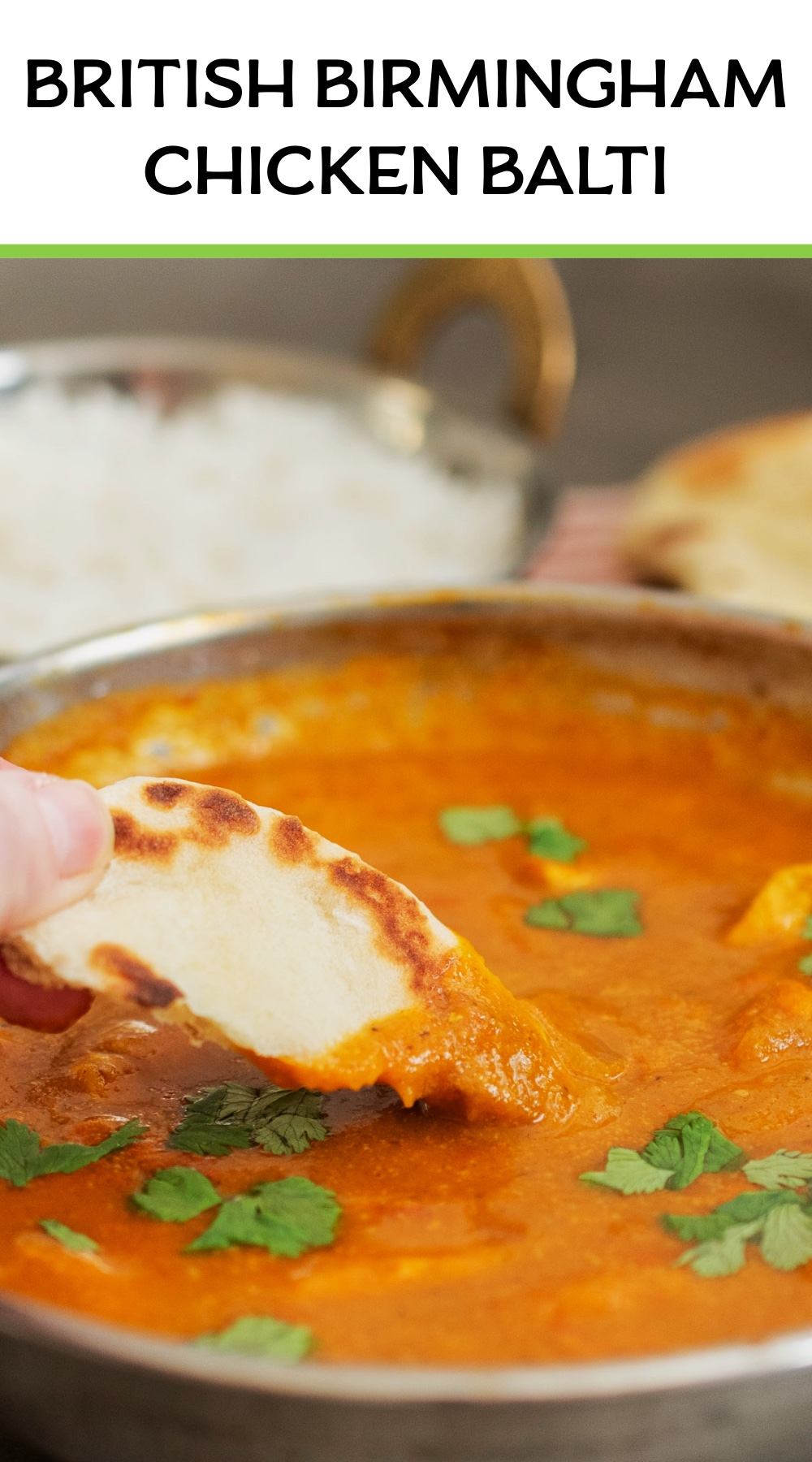

A South Asian-style curry invented in England that’s tastes as good as any Indian curry? It’s true! The famous Chicken Balti was created in Birmingham, England, by a Pakistani chef—and it’s become a true British curry house classic.
This is my British Birmingham Chicken Balti recipe that starts with a curry sauce made with onions, tomatoes, garlic, ginger, and a blend of spices. Chicken, lamb, or vegetables are then simmered with additional spices, ginger, and garlic in the rich Balti sauce.

Ingredients
- Garam masala
- Kashmiri (red chili powder)
- Turmeric
- Ground coriander
- Ground cumin
- Paprika
- Salt
- Fresh coriander/fresh cilantro
- Oil
- Onion
- Tomato
- Ginger
- Garlic
- Green chili pepper
- Chicken breast
What is Birmingham balti?
Birmingham Balti is a British-born twist on traditional Pakistani curry—fast, flavorful, and full of character. Similar to the India-style curries that became a staple across the UK., the Balti originated in the mid-1970s in Birmingham, a city right in the heart of England (and yes, also the hometown of Ozzy Osbourne!). It was created by Pakistani chefs who adapted classic Kashmiri cooking methods to suit British kitchens and tastes. Mostly made with chicken, lamb or vegetables.
What makes a Balti unique is:
- It’s cooked and served in the same thin, pressed-steel wok-like pan called a balti bowl (see more on this below).
- The curry is cooked quickly over high heat, rather than slowly simmered, giving it a lighter, fresher flavor.
- The sauce is tomato-based and spiced with garlic, ginger, cumin, coriander, and turmeric, among other traditional spices.
- It’s often served with naan bread, so you can scoop up the sauce straight from the bowl. Known locally as the ‘Birmingham scoop.’

What is a balti bowl?
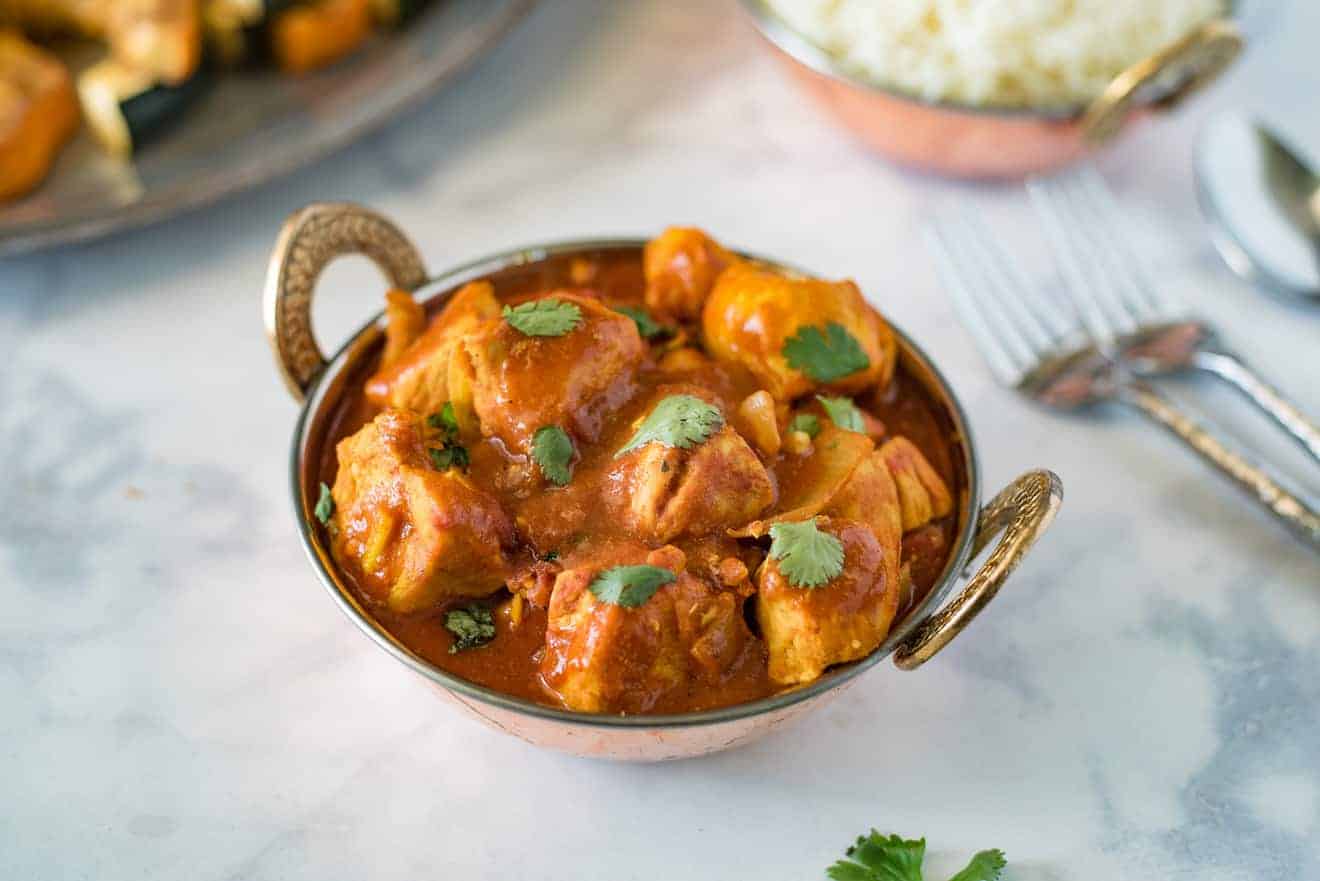
An authentic balti bowl (also called a balti pan or balti dish) is a thin, pressed-steel, wok-like dish traditionally used to both cook and serve a Balti curry.
It has two small handles and sloping sides, which allow the curry to cook quickly over high heat—similar to stir-frying. The steel retains heat well, keeping the curry hot all the way to the table.
Unlike heavy cast-iron pans, an authentic balti bowl is lightweight, making it ideal for fast cooking and that signature sizzling presentation.
In short, the authentic balti bowl isn’t just cookware—it’s a defining element of the Birmingham balti style of curry.
What is a balti bowl?
They’re easy to find if you’re in the UK, but for the rest of us, Amazon is usually the best option.
Balti triangle
The Balti Triangle is a famous area in Birmingham. It’s roughly located between Sparkbrook, Balsall Heath, and Moseley, three neighborhoods packed with Balti restaurants (often called Balti houses). In the 1980s and 1990s, this area became a cultural and culinary hotspot where diners could enjoy authentic Balti curries served sizzling hot in their signature steel bowls.
In short — the Balti Triangle is to Birmingham what Brick Lane is to London: a vibrant hub for South Asian food and culture, and the heart of Britain’s Balti tradition.

Balti base sauce (gravy)
The best curries start with a flavorful sauce base. Balti sauce is slightly sweet with a mild, spicy kick. Begin with the balti sauce—the base gravy you’ll add to your protein of choice. Make it the authentic way by using a blender to puree until smooth Then cook the chicken with onion, tomato, dry spices, garlic, and ginger, stirring in the sauce for a rich, delicious curry.
The balti base sauce does not have to be made in a balti pan, but the finished dish does as this is what it is served in an makes it traditional balti.
Make ahead balti sauce
I like to make a batch and keep it in the freezer, ready for when a curry craving strikes.
Cooking the spices
Here’s why you have to cook spices (or at least bloom them) before finishing a dish:
- To release their essential oils: Most spices—especially whole ones—contain aromatic oils locked inside. When you heat them in oil, butter, or ghee, those oils are released, intensifying the flavor and aroma.
- To deepen and round out flavor: Raw spices can taste sharp, bitter, or dusty. Cooking mellows harsh notes and brings out sweetness or smokiness. For example: raw cumin is pungent, but once cooked it becomes warm and earthy.
- To blend flavors into the dish: Cooking spices in fat at the start helps them coat onions, garlic, and other ingredients so the flavor infuses evenly throughout the sauce or curry.
This step is key in curries, soups, and stews—it’s what gives them that “cooked-in” flavor instead of tasting like something sprinkled on top. - To activate spice blends (like curry powder or garam masala): Many spice blends don’t truly come alive until they’re heated. The aroma blooms, and the flavor becomes layered rather than flat.
- Pro tip for burned spices: If your spices ever smell burnt, the pan was too hot or too dry. Always toast or fry them briefly in vegetable oil on medium heat, stirring constantly, until fragrant—usually 30 seconds to a minute.

Serving balti
Right before serving it is topped with fresh cilantro/coriander and always served in the balti pan. Sometimes rice but always with naan bread.
Customizing balti
Balti curry has a simple, flavorful base, but you can easily add ingredients to suit your taste:
- Vegetables: Bell peppers, spinach, peas, cauliflower, or mushrooms all work well. Add them at the appropriate stage to ensure even cooking.
- Proteins: Swap chicken for lamb, beef, shrimp, or tofu for variety.
- Spices & flavorings: Adjust the heat by adding more spicy green pepper or kashmiri.

More curry recipes
If you love the bold flavors of Balti, you’ll also enjoy these classic curries:
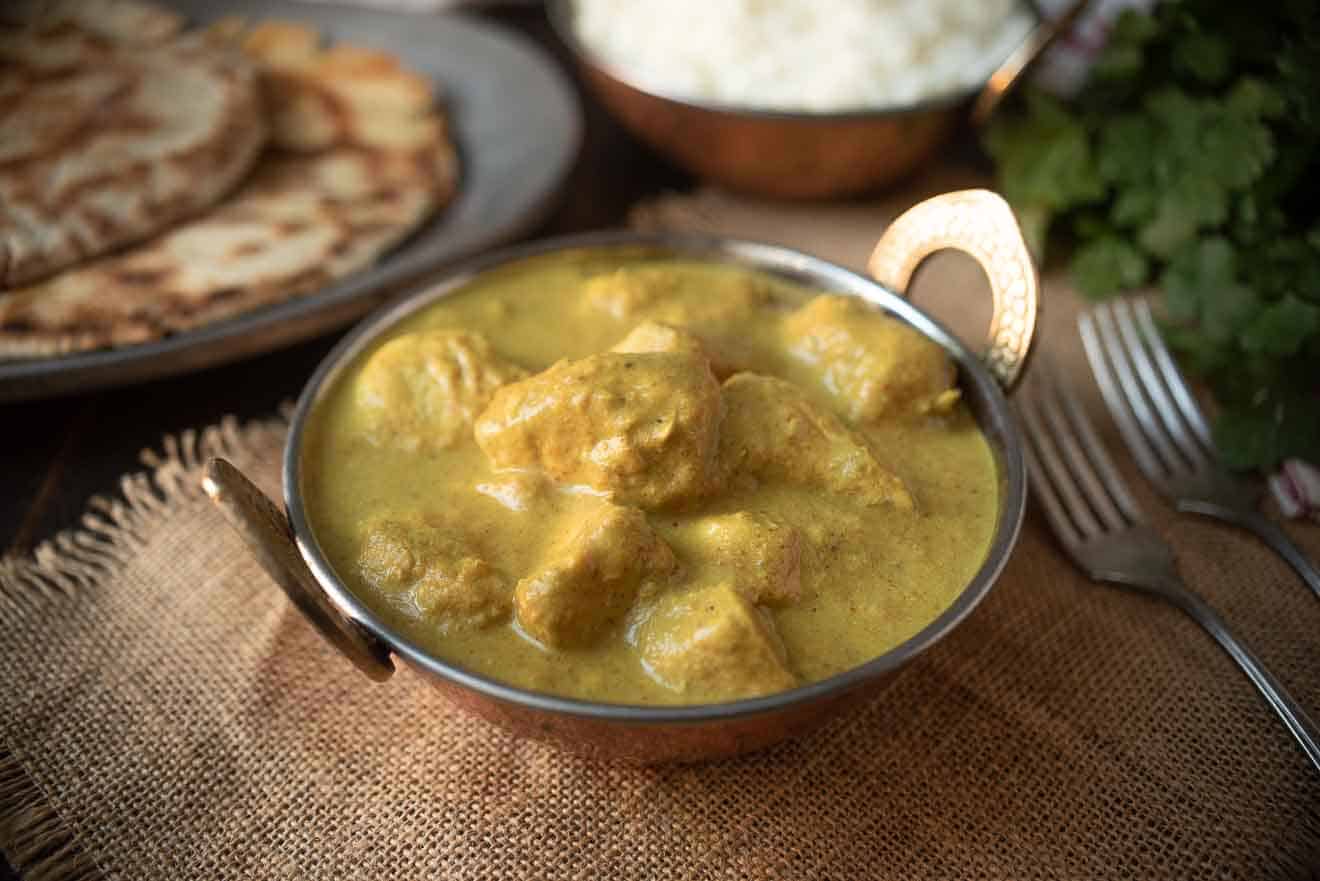
- Chicken Tikka Masala – Tender pieces of chicken marinated in yogurt and spices, then cooked in a creamy, tomato-based sauce. This British favorite is rich, comforting, and perfect with naan or rice.
- Chicken Madras Curry – A spicier option with deep, robust flavors from a blend of chili, cumin, coriander, and turmeric. Madras curry is fiery, fragrant, and ideal for anyone who loves a little heat.
- Chicken Korma – A milder, aromatic curry made with cream, yogurt, nuts, and warm spices. Korma offers a luxurious, creamy texture and is great for those who prefer a softer, more subtly spiced dish.
Storing leftover balti
To keep your Balti fresh, allow it to cool to room temperature before transferring it to an airtight container. Store in the refrigerator for up to 3–4 days.
For longer storage, Balti freezes well. Portion it into freezer-safe containers and freeze for up to 2–3 months. To reheat, thaw overnight in the refrigerator and warm gently on the stove, stirring occasionally to maintain the sauce’s texture and flavor.
Tip: Avoid reheating in a microwave if possible, as the sauce can separate. Gentle stovetop reheating preserves the authentic Balti flavor and consistency.
Ingredients
- For the balti curry base:
- 1 teaspoon garam masala
- ¼ teaspoon kashmiri (more if you want it spicier)
- 1 teaspoon turmeric
- 1 teaspoon ground coriander
- 1 teaspoon of salt
- 2 tablespoons high temperature oil
- 1 cup (128 grams) onion, peeled and chopped
- 1 large tomato, chopped
- 2 teaspoons fresh ginger, peeled and chopped
- 2 teaspoons (1 good size) garlic clove, peeled and chopped
- Handful of chopped cilantro/coriander
- 1¼ cups (300ml) water
- For the chicken balti:
- ¼ teaspoon paprika
- ¼ teaspoon cumin powder
- ¼ teaspoon garam masala
- 1 teaspoon salt
- 3 tablespoons oil
- 4 boneless, skinless chicken breasts, cut into large pieces
- 1 cup (128 grams) onion, peeled and chopped
- 1 small tomato, chopped
- 2 teaspoons (1 small) green chili pepper, seeds removed and chopped (add more if you want it spicier)
- 1 garlic clove, peeled and minced or grated
- 1 teaspoon fresh ginger, grated
- Fresh cilantro/coriander for garnish
Instructions
This yields 1 quart/1 liter of sauce.
- Mix the spices in a small bowl. To a frying pan add the oil over medium heat. When hot, add the onions and tomato and a small sprinkle of salt. Cook for a few minutes, stirring often just to soften and to help them release their juice. Turn down the heat and add the spices, stir to mix well. This cooks the raw taste out of the spices. Adjust the heat so the spices don’t burn. Add in the ginger and garlic, don’t allow to brown, just soften slightly for a minute or so.
- Add the water and bring to a low boil. Cover and simmer for 20 minutes. Allow to cool then add to a blender and puree until smooth. Set aside. If making the balti sauce ahead refrigerate or freeze until ready to use.
For the chicken balti:
- Mix the spices and salt in a small bowl. Heat the oil in a balti pan or wok over medium heat. Add the chicken and onion. Cook, stirring often until the chicken starts to get a little color.
- Add the tomato and chili pepper, cook to soften. Turn the heat down a little and add the spice mix, ginger and garlic. Regulate the heat so you don’t burn the spices or garlic. It should be a little saucy from the tomato.
- Add the half of balti sauce (2 cups/473 ml) and mix well. Bring to a bubble until the chicken is cooked and sauce is thickened, about 5-8 minutes.
- Taste for seasoning, add more salt if needed. Serve warm topped with a little chopped cilantro/coriander, naan bread and white rice.
Storing leftover balti
- To keep your Balti fresh, allow it to cool to room temperature before transferring it to an airtight container. Store in the refrigerator for up to 3–4 days.
- For longer storage, Balti freezes well. Portion it into freezer-safe containers and freeze for up to 2–3 months. To reheat, thaw overnight in the refrigerator and warm gently on the stove, stirring occasionally to maintain the sauce’s texture and flavor.
- Tip: Avoid reheating in a microwave if possible, as the sauce can separate. Gentle stovetop reheating preserves the authentic Balti flavor and consistency.
Nutrition Information
Yield
4
Serving Size
1
Amount Per Serving
Calories 430Total Fat 22gSaturated Fat 2gTrans Fat 0gUnsaturated Fat 18gCholesterol 102mgSodium 956mgCarbohydrates 17gFiber 3gSugar 8gProtein 40g
This nutrition calculation is provided by Nutronix that is only a guideline and not intended for any particular diet.

Janette is a professionally trained chef based in California who channels her passion for cooking into thoughtfully crafted recipes. Her culinary creations are inspired by her English heritage as well as her favorite global cuisines, including Indian and Italian. Connect with her on Facebook, Pinterest, and Instagram for more delicious inspiration. More About Janette…
Resep Makanan
Berita Olahraga
News
Berita Terkini
Berita Terbaru
Berita Teknologi
Seputar Teknologi
Drama Korea
Resep Masakan
Pendidikan
Berita Terbaru
Berita Terbaru
Berita Terbaru